
Description
An Industrial Evaporator is a heat transfer device engineered to facilitate the phase change of a fluid through boiling. In this process, the equipment absorbs heat from a surrounding medium (such as air or water) or a specific process stream, effectively cooling that medium while the internal refrigerant or fluid vaporizes.
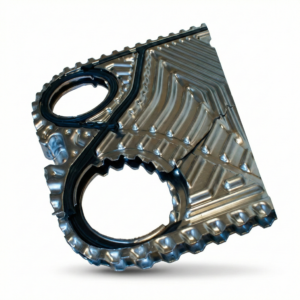
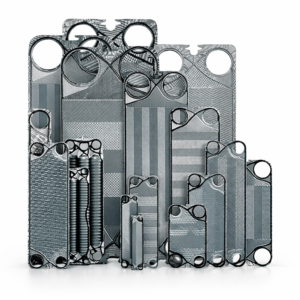
From a technical perspective, the design of Industrial Evaporators varies based on fluid viscosity, thermal load, and purity requirements. Common configurations include direct expansion, flooded, falling film, and plate-type models, each optimized to maximize the heat transfer coefficient and reduce energy consumption in large-scale industrial plants.
The efficiency of an Industrial Evaporator is a decisive factor in the overall performance of a thermal cycle. Consequently, they are manufactured using highly conductive and corrosion-resistant materials, such as 316L stainless steel, copper, or titanium, ensuring a long operational life even in aggressive chemical environments.
Key Features of Industrial Evaporators
- High Thermal Efficiency: Maximizes contact surface for rapid phase change.
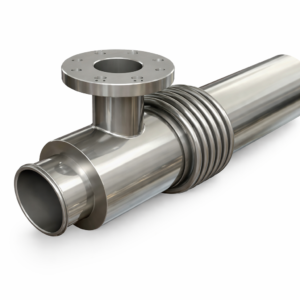
- Versatile Configurations: Available in shell and tube, plate, or finned-tube designs.
- Precise Pressure Control: Operates under specific conditions to optimize the boiling point.
- Mechanical Durability: Engineered to withstand extreme temperature differentials.
- Low Maintenance: Specially treated surfaces to reduce scaling and fouling.
Technical Specifications for Industrial Evaporators
- Product Type: Phase-change heat exchanger.
- Common Materials: Stainless Steel 316L, Copper, Aluminum, Titanium.
- Thermal Capacity: Measured in kW or Tons of Refrigeration (TR).
- Compatible Fluids: Ammonia (NH3), Glycol, synthetic refrigerants, aqueous solutions.
- Design Pressure: Variable according to refrigerant type and ASME/PED standards.
Uses and Applications of Industrial Evaporators
- Food & Beverage Industry: Juice concentration, milk evaporation, and dehydration.
- Industrial Refrigeration: Cooling for cold storage rooms and blast freezers.
- Wastewater Treatment: Liquid waste concentration through vacuum evaporation.
- Chemical Industry: Solvent separation and product crystallization.
- HVAC Systems: Air cooling in large facilities and data centers.
Usage and Maintenance Recommendations for Industrial Evaporators
- Perform regular cleaning to prevent the accumulation of sediment or biofilms.
- Monitor suction pressures to detect potential leaks or low refrigerant levels.
- Inspect the condition of associated fans or circulation pumps regularly.
- Ensure proper thermal insulation on all connection lines.
Frequently Asked Questions about Industrial Evaporators
What is the difference between an evaporator and a reboiler?
While both vaporize liquids, an industrial evaporator is typically part of a refrigeration cycle or a product concentration process, whereas a reboiler is specifically associated with distillation columns.
Why does ice form on an air-cooled evaporator?
This usually occurs due to insufficient airflow or an evaporation temperature that is too low. It requires automatic defrost systems to maintain operational efficiency.
Which material is best for corrosive products?
For aggressive chemical processes or brine handling, high-grade stainless steel or titanium alloys are recommended for the evaporator’s construction.