
Industrial Evaporators are high-performance heat exchangers designed to convert liquid into vapor by absorbing thermal energy, serving as critical components in refrigeration cycles, food processing, and chemical manufacturing.
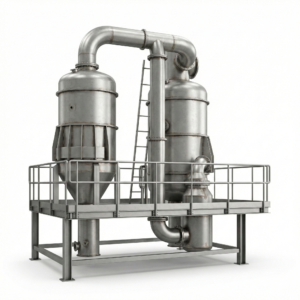
An Industrial Evaporator is a heat transfer device engineered to facilitate the phase change of a fluid through boiling. In this process, the equipment absorbs heat from a surrounding medium (such as air or water) or a specific process stream, effectively cooling that medium while the internal refrigerant or fluid vaporizes.
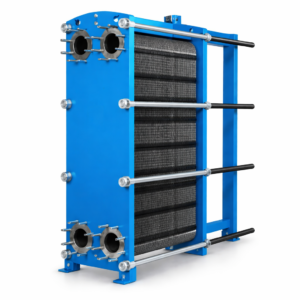
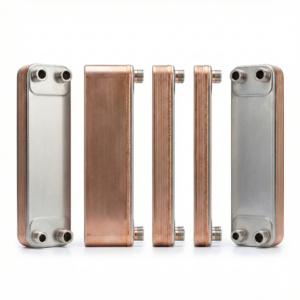
From a technical perspective, the design of Industrial Evaporators varies based on fluid viscosity, thermal load, and purity requirements. Common configurations include direct expansion, flooded, falling film, and plate-type models, each optimized to maximize the heat transfer coefficient and reduce energy consumption in large-scale industrial plants.
The efficiency of an Industrial Evaporator is a decisive factor in the overall performance of a thermal cycle. Consequently, they are manufactured using highly conductive and corrosion-resistant materials, such as 316L stainless steel, copper, or titanium, ensuring a long operational life even in aggressive chemical environments.
Key Features of Industrial Evaporators
Technical Specifications for Industrial Evaporators
Uses and Applications of Industrial Evaporators
Usage and Maintenance Recommendations for Industrial Evaporators
Frequently Asked Questions about Industrial Evaporators
What is the difference between an evaporator and a reboiler?
While both vaporize liquids, an industrial evaporator is typically part of a refrigeration cycle or a product concentration process, whereas a reboiler is specifically associated with distillation columns.
Why does ice form on an air-cooled evaporator?
This usually occurs due to insufficient airflow or an evaporation temperature that is too low. It requires automatic defrost systems to maintain operational efficiency.
Which material is best for corrosive products?
For aggressive chemical processes or brine handling, high-grade stainless steel or titanium alloys are recommended for the evaporator’s construction.

Ask us on WhatsApp
Get a quote now