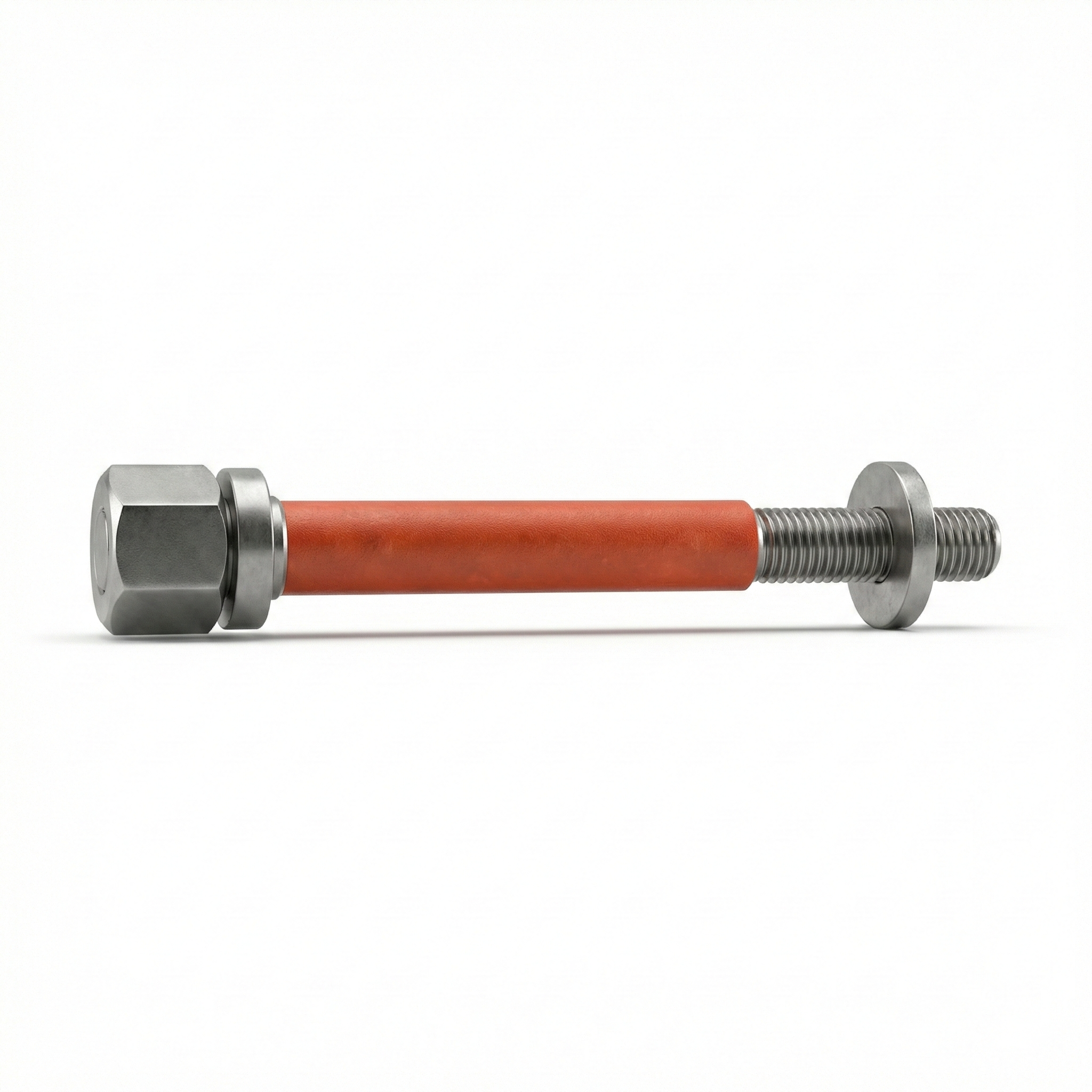
Description
Tightening Bolts are essential mechanical components used in plate heat exchangers to apply and maintain the required compression force across the plate pack assembly. As key heat exchanger replacement parts, these bolts ensure proper sealing between plates and gaskets, preventing fluid leakage while preserving operational efficiency and system safety.
Manufactured from high-strength alloy or stainless steel materials, tightening bolts are engineered to withstand continuous mechanical stress, vibration, and thermal expansion commonly present in industrial heat transfer systems. Correct bolt tension guarantees uniform pressure distribution across the exchanger frame, extending equipment lifespan and maintaining consistent heat transfer performance.
Main Features of Tightening Bolts
- High mechanical resistance: designed for heavy-duty compression loads.
- Precision threading: ensures accurate plate pack tightening.
- Corrosion-resistant materials: suitable for industrial environments.
- Reliable sealing performance: maintains gasket compression integrity.
- Long operational lifespan: resistant to fatigue and deformation.
- Easy replacement: compatible with maintenance procedures.
Technical Specifications of Tightening Bolts
- Component type: heat exchanger frame fastening element.
- Material: carbon steel or stainless steel alloys.
- Surface treatment: anti-corrosion coating or galvanization.
- Thread type: precision-machined industrial threading.
- Compatibility: plate and frame heat exchangers.
- Function: compression and structural fixation.
Applications of Tightening Bolts in Heat Exchangers
- Plate heat exchanger maintenance: restoring compression force.
- Equipment overhaul: replacement during servicing operations.
- Leak prevention: ensuring proper gasket sealing.
- Industrial process systems: HVAC, chemical, and food processing plants.
- Thermal system refurbishment: extending exchanger service life.
Recommendations for Installation and Use
- Apply uniform torque according to manufacturer specifications.
- Inspect bolts periodically for corrosion or deformation.
- Replace damaged bolts during gasket or plate servicing.
- Lubricate threads when required to ensure proper tightening.
- Avoid uneven compression that may damage exchanger plates.
Frequently Asked Questions about Tightening Bolts
Why are tightening bolts important in heat exchangers?
They maintain the correct compression of plates and gaskets, ensuring leak-free operation and stable heat transfer performance.
When should tightening bolts be replaced?
Replacement is recommended when bolts show wear, corrosion, thread damage, or loss of tightening capacity.
Are tightening bolts universal?
No, dimensions and strength ratings must match the specific heat exchanger model.
Can improper tightening affect performance?
Yes, uneven or insufficient tightening may cause leakage, reduced efficiency, or mechanical damage.