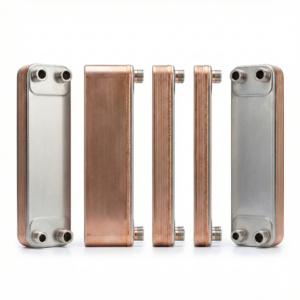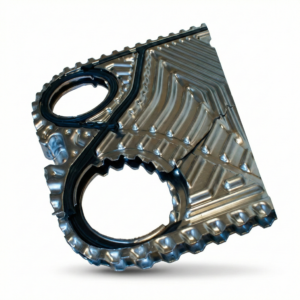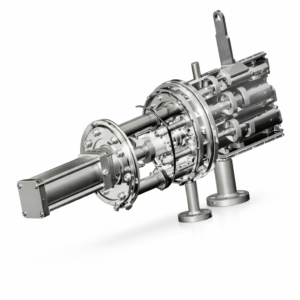
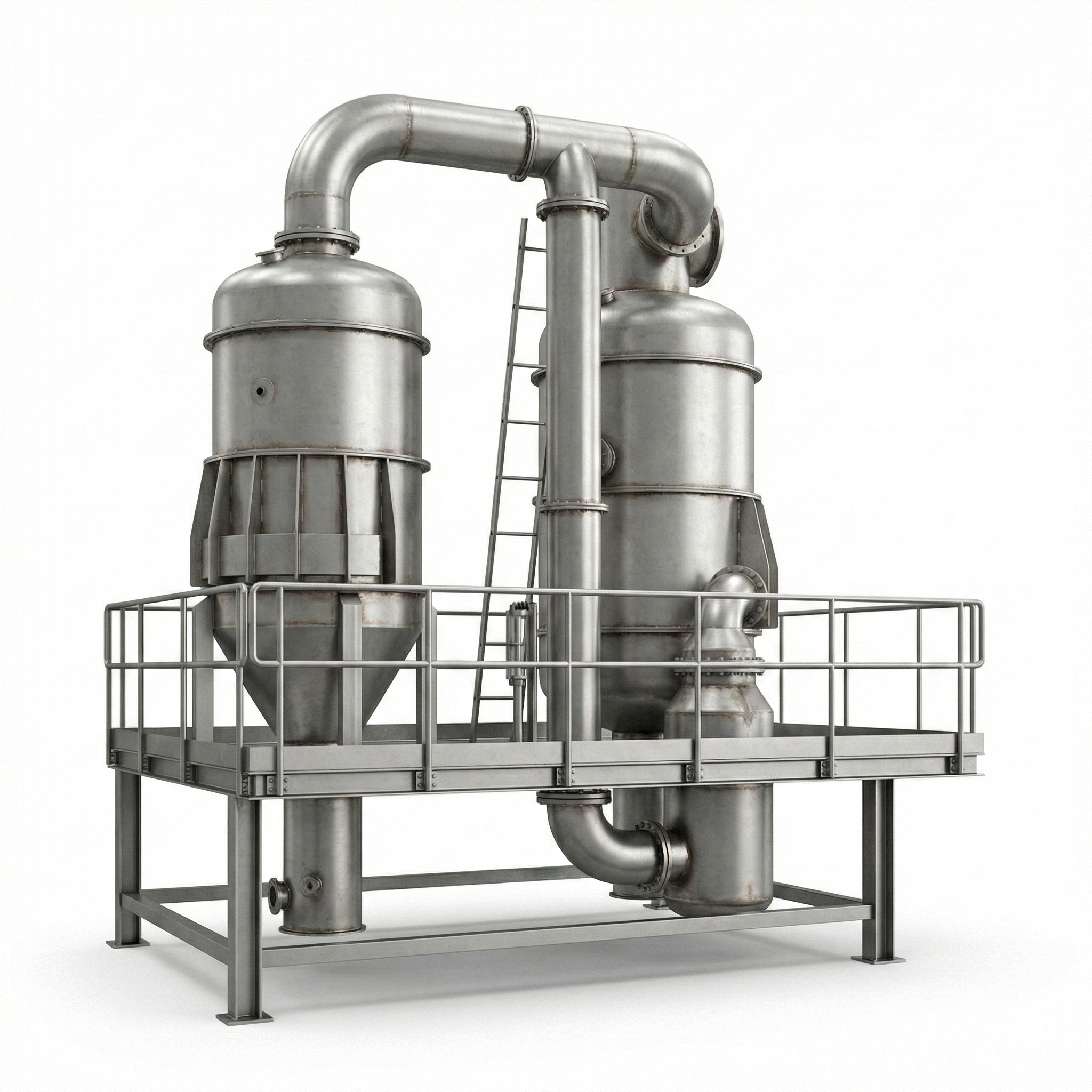
Industrial Condensers are advanced thermal exchange units designed to transform vapors or gases into liquids by rejecting heat, essential for power plants, refrigeration systems, and distillation processes.
The Industrial Condenser performs the inverse function of the evaporator within a thermal cycle. Its primary objective is to reject the heat absorbed by a fluid into a cooling medium (typically air or water), causing the gas to liquefy. This process is fundamental for closing the work cycle in power plants, refineries, and industrial air conditioning systems.
Various types of Industrial Condensers exist depending on the cooling medium used: air-cooled (radiator type), water-cooled (shell and tube), and evaporative condensers, which combine both principles. The selection of the appropriate model depends directly on water resource availability and the environmental conditions of the installation site.
A high-performance Industrial Condenser allows for a reduction in the discharge pressure of compressors or turbines. This translates directly into significant energy savings and a lower carbon footprint for the industrial operation.
Key Features of Industrial Condensers
Technical Specifications for Industrial Condensers
Uses and Applications of Industrial Condensers
Usage and Storage Recommendations for Industrial Condensers
Frequently Asked Questions about Industrial Condensers
Is an air-cooled or water-cooled condenser better?
Water-cooled units are thermally more efficient but require cooling towers and water treatment. Air-cooled units are easier to maintain and do not consume water, though their efficiency depends more on ambient temperature.
How does fouling affect a condenser?
Fouling creates an insulating barrier that reduces heat transfer, increasing the operating pressure and the electrical consumption of the entire system.
What is an evaporative condenser?
It is a hybrid equipment that uses the evaporation of a small amount of water sprayed over coils to cool the internal fluid, achieving lower condensing temperatures than a dry air-cooled condenser.

Ask us on WhatsApp
Get a quote now