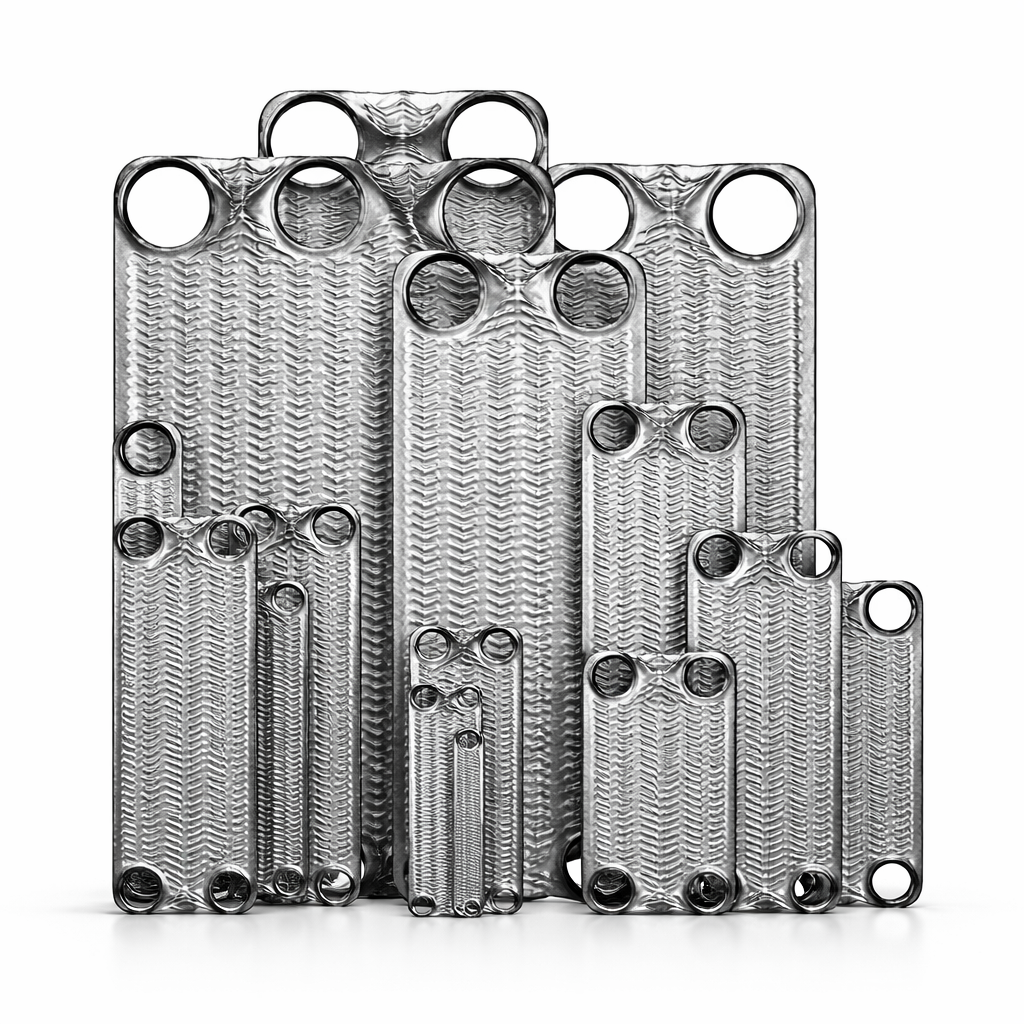
Free Flow Plates are specially designed heat exchanger plates engineered to handle fluids with high viscosity, fibers, or solid particles, providing reliable thermal transfer with reduced clogging risk and optimized flow performance in demanding industrial applications.
Free Flow Plates are advanced plate heat exchanger components specifically engineered to process fluids that contain high viscosity, suspended solids, fibers, or particulate matter. Unlike conventional corrugated plates, free flow plates feature wider channel gaps and optimized flow geometry that minimize the risk of fouling and clogging while maintaining efficient heat transfer performance.
These plates are commonly used in industries where standard plate designs would be prone to blockage due to the nature of the fluid. The open channel configuration allows larger particles to pass through more easily, reducing pressure drop and maintaining consistent operational efficiency. Free flow plates are typically manufactured from corrosion-resistant materials such as stainless steel to ensure durability and long service life under demanding thermal and chemical conditions.
Main Features of Free Flow Plates
Technical Specifications of Free Flow Plates
Uses and Applications of Free Flow Plates
Recommendations for Installation and Use
Frequently Asked Questions about Free Flow Plates
What makes Free Flow Plates different from standard plates?
Free Flow Plates have larger channel gaps and a modified plate geometry that allows fluids containing solids or high viscosity to pass through with reduced clogging risk, making them ideal for challenging industrial processes.
Are Free Flow Plates suitable for high-viscosity fluids?
Yes. They are specifically designed to handle viscous fluids, fiber-containing liquids, and media with suspended particles while maintaining reliable heat transfer performance.
Do they reduce maintenance requirements?
Because they minimize fouling and blockage, Free Flow Plates can reduce cleaning frequency and maintenance downtime compared to traditional narrow-channel plates.
In which industries are Free Flow Plates commonly used?
They are widely used in food processing, wastewater treatment, pulp and paper, chemical manufacturing, and bioenergy industries where fluid consistency and cleanliness vary significantly.

Ask us on WhatsApp
Get a quote now