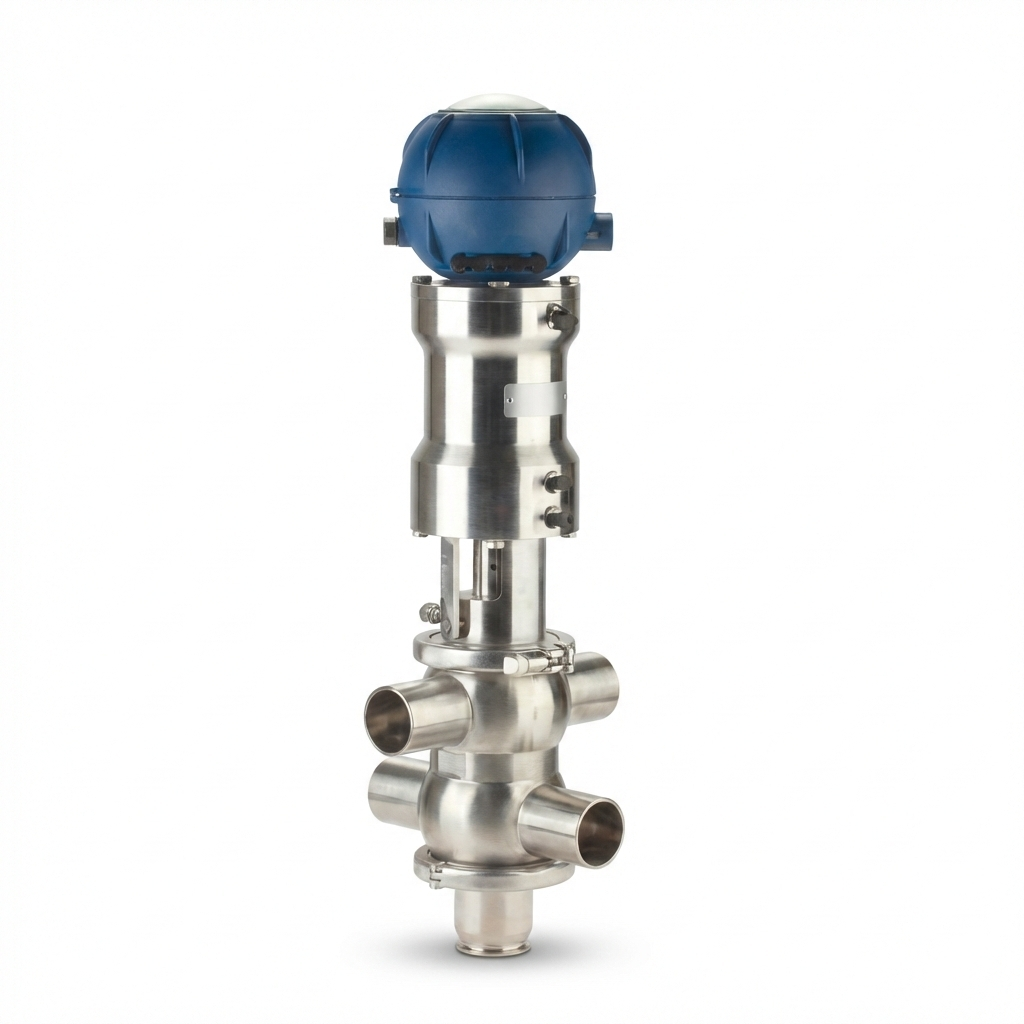
Description
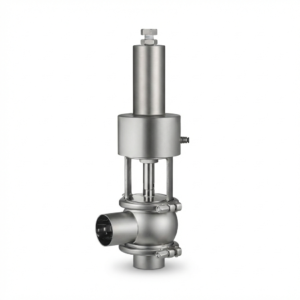
The Double Seat Valve is the “multitasking master” of the sanitary processing world. Its primary advantage lies in its unique construction: two independent valve seats separated by a leak chamber (atmospheric vent). This configuration allows two different fluids—such as a food product and a CIP (Clean-in-Place) solution—to flow through the same valve simultaneously. If a seal fails, the liquid is safely diverted to the leak chamber and out of the system, providing a visual fail-safe against cross-contamination.
Technically, modern Double Seat Valves are equipped with “seat lift” capabilities. This allows each seat to be cleaned independently during the process without needing to shut down the entire line. This functionality dramatically increases plant uptime and reduces the water and chemical consumption typically associated with traditional manifold cleaning. They are the standard for high-volume dairy, brewery, and beverage operations where efficiency and safety are non-negotiable.
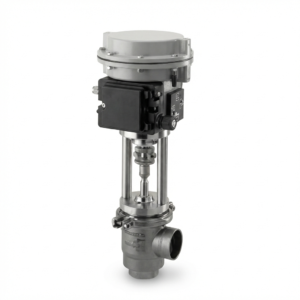
Our Double Seat Valves are built with high-precision actuators and advanced control heads that provide real-time feedback to the PLC. This ensures that every movement is monitored, documented, and safe, meeting the most stringent global food safety and pharmaceutical standards (3-A, EHEDG).
Key Features of Double Seat Valves
- Mixproof Technology: Complete separation of incompatible fluids in a single unit.
- Seat Lift Functionality: Active cleaning of seal surfaces during the production cycle.
- Integrated Leak Detection: Atmospheric vent provides immediate visual proof of seal integrity.
- Water Hammer Resistance: Balanced plug design prevents accidental opening during pressure surges.
- Maintenance-Friendly: Designed for easy seal replacement without specialized heavy tools.
Technical Specifications for Double Seat Valve
- Materials: AISI 316L Stainless Steel (Product contact).
- Seal Materials: EPDM, HNBR, or FKM (FDA & USP Class VI compliant).
- Max Operating Pressure: Typically up to 10 bar (145 psi).
- Control Signal: Digital or Bus communication (AS-i, IO-Link).
- Sizes: Available from 1.5″ to 6″ (DN40 to DN150).
Uses and Applications of Double Seat Valves
- Dairy Manifolds: Simultaneous milk processing and line cleaning.
- Brewing: Managing yeast handling and beer routing in fermentation cellars.
- Beverage Plants: Efficient syrup blending and flavor changeovers.
- Pharmaceuticals: Sterile routing of media and buffer solutions.
- Liquid Egg Processing: Handling sensitive proteins with maximum hygiene.
Usage and Maintenance Recommendations for Double Seat Valve
- Monitor the leak chamber outlet regularly for any signs of product or cleaning agent.
- Ensure the compressed air supply is dry and lubricated to protect the pneumatic actuator.
- Replace O-rings and gaskets during scheduled annual PM (Preventative Maintenance).
- Use the seat-lift function periodically to ensure seals do not “stick” during long production runs.
Frequently Asked Questions about Double Seat Valve
What makes a valve “Mixproof”?
It is the physical air gap between the two seats. Even if one seal fails, the fluid enters the atmospheric vent rather than mixing with the other fluid, keeping your product safe.
How does it save money?
By allowing you to clean part of your system while the rest is still producing, you drastically reduce downtime and the number of valves needed in a manifold.
Is it hard to clean?
No, the seat-lift and seat-push features are specifically designed to allow CIP fluid to reach every internal surface, including the seal seats, while the valve is in operation.