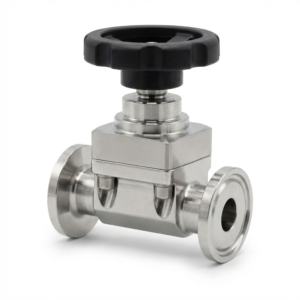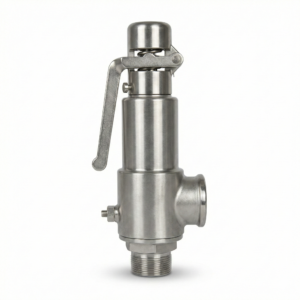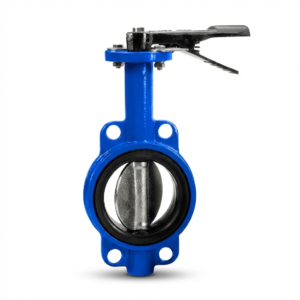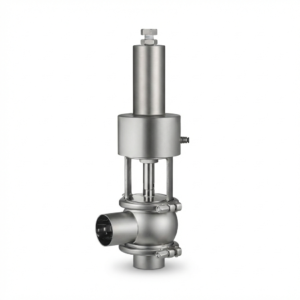
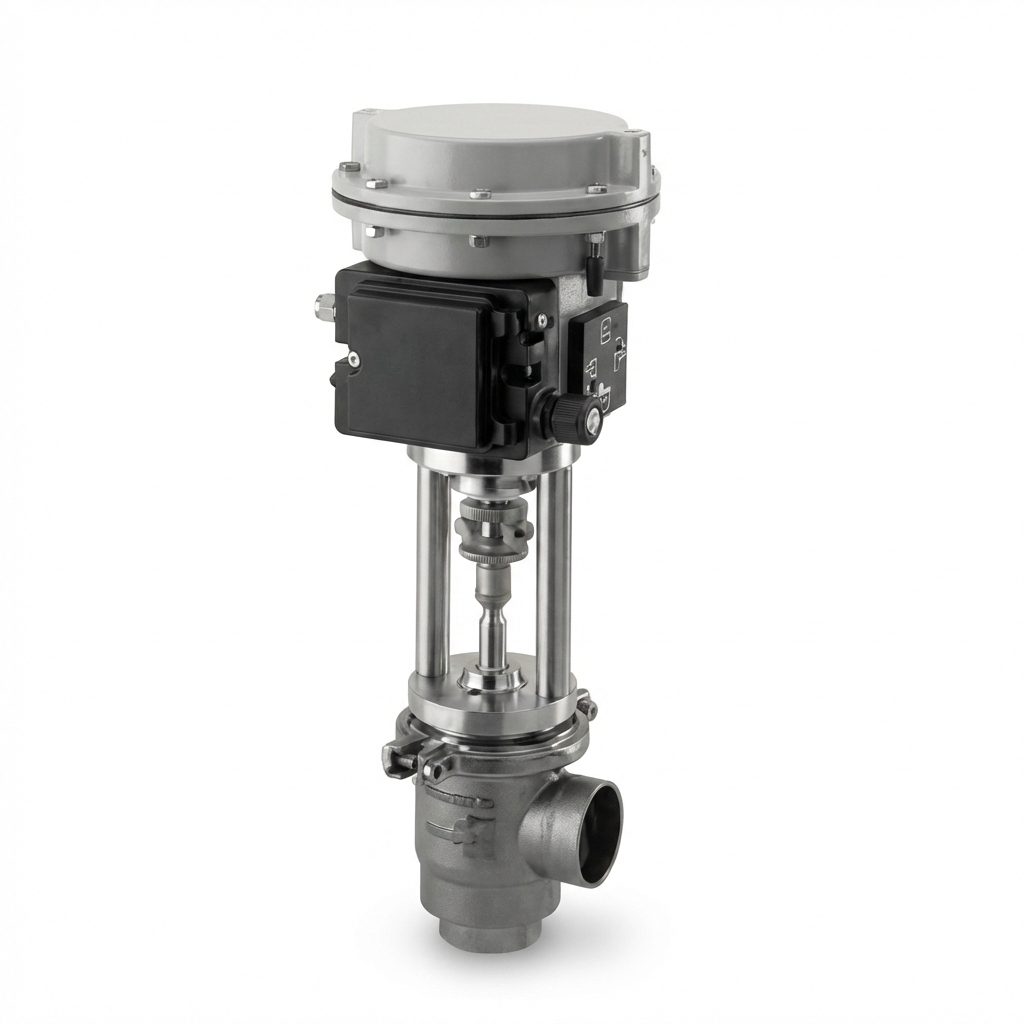
A Control Valve is a precision-modulating device used to regulate process variables such as flow, pressure, temperature, or liquid level by varying the orifice size in response to a signal from a controller.
The Control Valve is the “brain and muscle” of an automated industrial system. Unlike standard on/off valves, a control valve can move to any position between fully open and fully closed. This allows for the exact management of steam, water, or chemical flows to maintain a steady process setpoint. Whether you are maintaining a constant temperature in a pasteurizer or regulating pressure in a refinery, the control valve is the final element that makes automation possible.
Technically, the performance of a Control Valve depends on the synergy between the valve body, the trim (the internal parts that contact the fluid), and the actuator. We offer various flow characteristics, such as “Equal Percentage” for pressure control or “Linear” for level control, ensuring that the valve responds predictably to every signal change. Precision-engineered positioners ensure the valve plug moves exactly to the required millimeter, even under high-pressure drops.
Built for the rigors of heavy industry, our Control Valves are designed with high-quality packing and hardened trims to resist erosion, cavitation, and flashing. This ensures a long service life and high rangeability, allowing the same valve to control both very small and very large flow rates with the same degree of accuracy.
Key Features of Control Valves
Technical Specifications for Control Valve
Uses and Applications of Control Valves
Usage and Maintenance Recommendations for Control Valve
Frequently Asked Questions about Control Valve
What is $C_v$ and why does it matter?
The $C_v$ (Flow Coefficient) indicates the flow capacity of the valve. Choosing the right $C_v$ is vital; an oversized valve will be hard to control, while an undersized one won’t provide enough flow.
Pneumatic vs. Electric: Which is better?
Pneumatic actuators are faster and offer easier fail-safe options. Electric actuators are ideal for locations where compressed air is unavailable and offer high precision for very slow processes.
How do I stop valve noise?
High-pressure drops can cause noise. We can equip your control valve with specialized “Whisper” trims or multi-stage cages to dissipate energy and reduce decibel levels.

Ask us on WhatsApp
Get a quote now