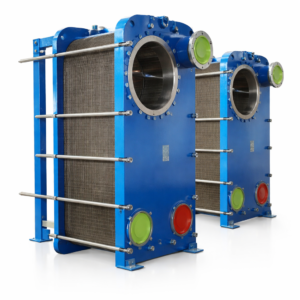

The Frame of a Plate Heat Exchanger is the heavy-duty pressure vessel assembly that houses, compresses, and seals the internal plate pack, designed to withstand intense industrial pressures and temperatures.
The Frame is the most substantial part of a Plate Heat Exchanger (PHE), acting as the containment system for the thermal process. It consists of two main components: the Fixed Frame Plate (Head) and the Movable Pressure Plate (Follower). Together with the tightening bolts, the frame provides the massive clamping force required to compress the gaskets and plates into a single, hermetic unit.
Technically, the Frame is engineered to meet stringent pressure vessel codes such as ASME Section VIII or the PED. Its thickness and material grade are calculated based on the maximum allowable working pressure (MAWP) of the process. The frame also houses the connection ports (inlets and outlets), which can be lined with rubber, stainless steel, or exotic metals to protect the frame material from corrosive fluids.
Modern industrial Frames are finished with high-quality epoxy coatings to resist the corrosive atmospheres found in chemical plants, offshore platforms, and refineries. Their robust design ensures that even under fluctuating temperatures and pressures, the plate pack remains securely compressed, preventing internal cross-contamination or external leakage.
Key Features of PHE Frames
Technical Specifications for PHE Frames
Uses and Applications of PHE Frames
Usage and Maintenance Recommendations for PHE Frames
Frequently Asked Questions about PHE Frames
Can I add more plates to my existing frame?
Usually, yes. Frames are often designed with extra length on the guide bar to allow for future expansion of the plate pack to increase capacity.
What is a “Sanitary Frame”?
A sanitary frame is typically made of solid stainless steel or cladded in stainless steel, designed without “dead spots” where bacteria can grow, making it ideal for food and pharma.
How do I know if my frame is over-tightened?
Over-tightening can be identified by the “bowing” of the pressure plates or if the A-dimension is less than the minimum specified by the manufacturer. This can permanently damage the plates.

Ask us on WhatsApp
Get a quote now