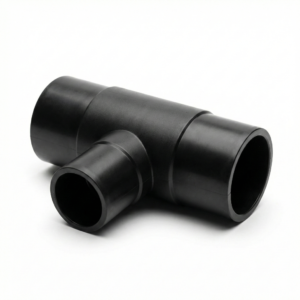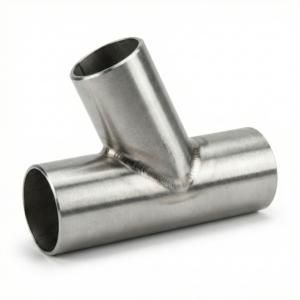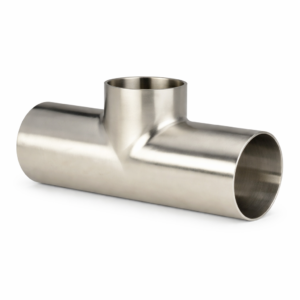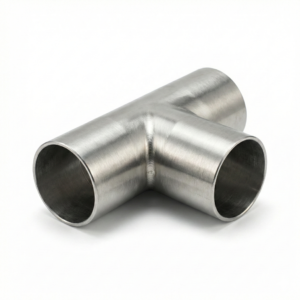

The Tees 176° is a high-precision sanitary fitting designed with a 4-degree offset to facilitate a 2-degree slope on each side, ensuring total gravity drainage and preventing stagnant liquid in sterile process lines.
The Tees 176° is a specialized solution for complex piping layouts in the pharmaceutical, biotechnology, and food industries. While a standard tee sits at a perfect 180-degree straight line, the 176-degree configuration introduces a subtle but vital 4-degree “V” shape. This design ensures that when the tee is installed in a horizontal run, both incoming lines maintain a 2-degree slope toward the center or away from it, allowing for complete evacuation of the system.
Technically, the Tees 176° is a cornerstone of “Dead Leg” prevention and validated cleaning processes. In many high-purity systems, even a few drops of stagnant fluid can lead to microbial growth or batch contamination. By using these angled tees, engineers can design piping networks that are fully self-draining, meeting the strict requirements of ASME BPE and other international sanitary standards.
Manufactured from premium AISI 316L stainless steel, our Tees 176° fittings undergo rigorous surface treatment. The internal bore is typically electropolished to achieve ultra-low roughness values, ensuring that no residue can cling to the metal surface during Clean-in-Place (CIP) or Sterilize-in-Place (SIP) cycles.
Key Features of Tees 176°
Technical Specifications for Tees 176°
Uses and Applications of Tees 176°
Usage and Maintenance Recommendations for Tees 176°
Frequently Asked Questions about Tees 176°
Why is it 176° and not 180°?
A 180° tee is perfectly flat. In horizontal runs, a flat tee allows liquid to sit at the bottom. The 176° bend creates a slight slope that uses gravity to pull every drop out of the fitting.
Is this used in standard industrial plumbing?
No. This is a specialized fitting for high-purity “hygienic” piping where microbial control is the priority.
Does it complicate the welding process?
Slightly. It requires more precise fit-up than a standard straight tee, but modern orbital welding heads are designed to accommodate these angles easily.

Ask us on WhatsApp
Get a quote now